

Introduction
Your living space should evolve with your lifestyle, and 2025 brings exciting opportunities to enhance both functionality and aesthetics in every room. Whether you’re preparing to sell your property or simply want to create a more comfortable environment for your family, strategic renovations can dramatically transform how you experience your dwelling daily.
The residential renovation industry has seen remarkable shifts this year, with homeowners increasingly prioritizing sustainability, smart technology, and multi-functional spaces. According to the National Association of Home Builders’ 2025 report, Americans are investing an average of $18,500 annually in property enhancements, with kitchen and bathroom projects leading the way. These home improvement ideas we’ll explore today range from budget-friendly weekend projects to comprehensive renovations that require professional expertise.
Kitchen Renovations That Deliver Maximum ROI
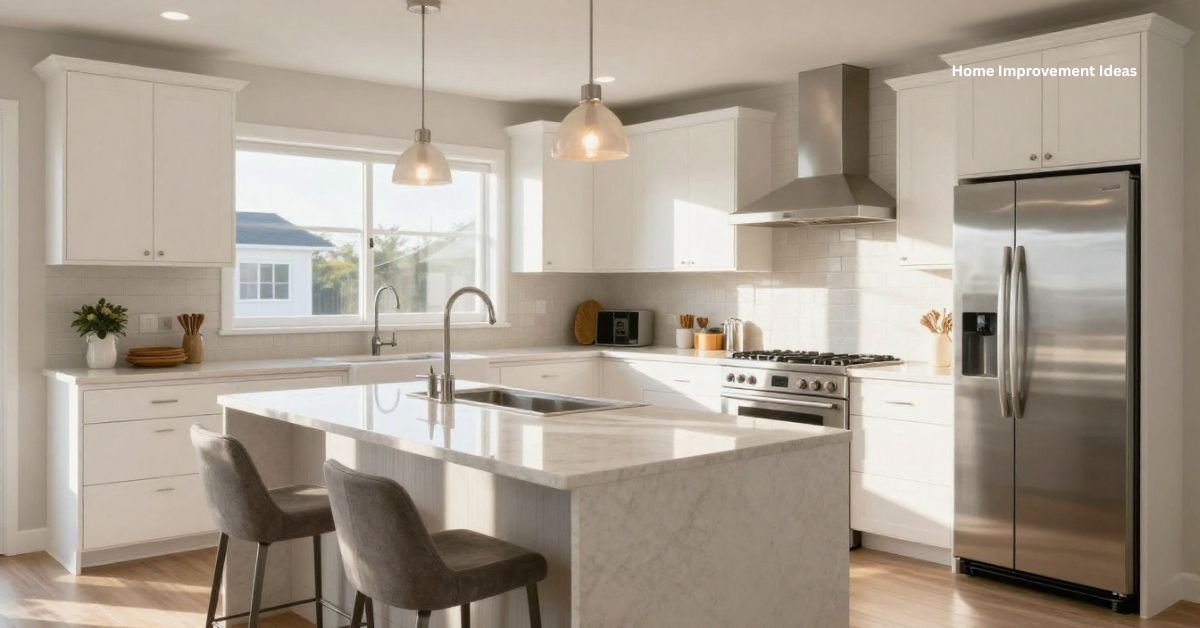
The kitchen remains the heart of every household, and strategic upgrades here consistently deliver the strongest return on investment. Modern families spend significant time in this space for cooking, dining, working, and socializing, making functionality paramount.
Cabinet refacing offers an excellent middle-ground solution for homeowners seeking dramatic visual change without complete replacement costs. This process involves replacing cabinet doors and drawer fronts while keeping existing cabinet boxes intact, typically saving 40-50% compared to full replacement. For 2025, matte finishes in sage green, warm terracotta, and classic navy are trending strongly alongside timeless white and natural wood tones.
Smart appliances represent another worthwhile investment, with refrigerators featuring internal cameras, ovens with remote monitoring capabilities, and dishwashers that automatically order detergent becoming mainstream rather than luxury items. These technological integrations not only add convenience but also improve energy efficiency, reducing utility costs over time.
Consider these popular kitchen upgrade options:
- Undermount sinks with touchless faucets for improved hygiene
- Pull-out pantry systems maximizing storage in narrow spaces
- Induction cooktops offering faster, safer, and more energy-efficient cooking
- Soft-close drawers and cabinet doors for quieter operation
- Task lighting under cabinets illuminating work surfaces effectively
Bathroom Upgrades for Modern Living
Bathroom renovations consistently rank among the most valuable property enhancements, with mid-range remodels recouping approximately 60-70% of costs at resale according to Remodeling Magazine’s 2025 Cost vs. Value Report. Beyond financial returns, updated bathrooms significantly improve daily comfort and convenience.
Walk-in showers continue replacing traditional tubs in primary bathrooms, reflecting changing preferences and accessibility considerations. Curbless designs create seamless transitions, making spaces appear larger while accommodating aging-in-place requirements. Large-format tiles with minimal grout lines reduce maintenance and create contemporary aesthetics that appeal broadly.
Floating vanities have become standard in modern bathroom design, creating visual spaciousness while simplifying floor cleaning. Paired with vessel sinks or integrated basin designs, these installations transform functional spaces into spa-like retreats. Storage solutions built into mirrors and medicine cabinets maximize every available inch.
Smart Technology Integration
Connected home technology has matured significantly, moving beyond novelty into genuine utility that enhances security, convenience, and energy management. The smart home market reached $158 billion globally in 2025, reflecting widespread adoption across demographic groups.
Comprehensive hub systems from manufacturers like Amazon, Google, and Apple now communicate seamlessly with thousands of compatible devices, allowing centralized control through voice commands or smartphone applications. This interconnectivity means your thermostat can communicate with window sensors, adjusting heating and cooling based on whether windows are open.
| Smart Home Category | Average Cost | Annual Energy Savings | Installation Complexity |
|---|---|---|---|
| Smart Thermostat | $150-300 | $140-180 | DIY-Friendly |
| Smart Lighting System | $200-500 | $75-100 | DIY-Friendly |
| Video Doorbell | $100-350 | N/A | DIY-Friendly |
| Smart Lock System | $200-400 | N/A | Moderate |
| Whole-Home Security | $300-1,500 | N/A | Professional Recommended |
| Automated Blinds | $400-1,000 per window | $100-200 | Professional Recommended |
Security systems have evolved dramatically, with artificial intelligence enabling cameras to distinguish between family members, delivery personnel, and potential intruders. Facial recognition technology automatically disarms systems for recognized individuals while alerting homeowners to unknown visitors. Package detection notifications help prevent theft from porches and entryways.
Energy-Efficient Windows and Insulation
Energy efficiency represents one of the smartest long-term investments any property owner can make, with proper insulation and high-performance windows reducing heating and cooling costs by 20-40% annually. Beyond financial savings, these upgrades improve comfort by eliminating drafts and maintaining consistent temperatures throughout living spaces.
Triple-pane windows have become increasingly affordable, offering superior thermal performance compared to double-pane alternatives. Low-E coatings reflect infrared light while allowing visible light transmission, keeping interiors cooler during summer and warmer during winter. Argon or krypton gas fills between panes provide additional insulation without adding weight.
Attic insulation remains the single most impactful efficiency upgrade for most properties. The Department of Energy recommends R-38 to R-60 insulation levels for attics in most climate zones, yet many older structures fall significantly below these standards. Blown-in cellulose or fiberglass installation typically costs $1,500-3,000 for average-sized attics while reducing energy consumption immediately.
Outdoor Living Space Enhancements
Outdoor living areas have gained tremendous importance since 2020, with this trend continuing strongly into 2025. Properties featuring functional outdoor spaces command premium prices and provide daily enjoyment for residents seeking connection with nature without leaving their property.
Deck construction or replacement remains among the most popular exterior projects, with composite materials increasingly favored over traditional wood. Modern composite decking resists fading, staining, and moisture damage while requiring minimal maintenance beyond occasional cleaning. Though initial costs exceed pressure-treated lumber by 30-50%, lifetime expenses prove comparable when factoring maintenance and replacement intervals.
Comparison of Decking Materials (2025 Pricing)
| Material Type | Cost Per Sq Ft | Lifespan | Maintenance Level |
|---|---|---|---|
| Pressure-Treated Wood | $15-25 | 10-15 years | High |
| Cedar/Redwood | $25-40 | 15-20 years | Moderate |
| Composite | $30-60 | 25-30 years | Low |
| PVC/Plastic | $35-70 | 25-50 years | Very Low |
| Aluminum | $50-100 | 50+ years | Minimal |
Outdoor kitchens have evolved from simple grill stations into comprehensive cooking environments featuring refrigeration, sinks, storage, and multiple cooking surfaces. Built-in components designed specifically for exterior use withstand weather exposure while providing functionality rivaling indoor kitchens.
Flooring Solutions for Every Budget
Flooring dramatically influences how spaces look and feel, making it among the most transformative upgrades available. Material selection depends on room function, traffic levels, moisture exposure, and aesthetic preferences, with excellent options existing across every price range.
Luxury vinyl plank flooring has revolutionized affordable flooring, offering realistic wood and stone appearances with waterproof performance and comfortable underfoot feel. Rigid core varieties provide enhanced stability and can be installed over minor subfloor imperfections, reducing preparation requirements and costs.
Engineered hardwood provides authentic wood beauty with improved stability compared to solid hardwood, making it suitable for basements and areas with humidity fluctuations. Wide plank formats and wire-brushed textures remain popular in 2025, creating character-rich surfaces that complement various design styles from farmhouse to contemporary.
Storage and Organization Systems
Effective storage transforms chaotic spaces into serene environments where everything has designated locations. Custom solutions tailored to specific needs deliver superior functionality compared to generic approaches, though excellent prefabricated options exist for budget-conscious homeowners.
Closet systems represent particularly impactful investments, with proper organization doubling usable storage capacity in many situations. Adjustable shelving, multiple hanging rods at varying heights, drawer systems, and specialty organizers for shoes, belts, and accessories maximize every cubic foot available.
Garage organization has grown increasingly sophisticated, with wall-mounted track systems accommodating hooks, baskets, shelves, and specialty holders for tools, sports equipment, and seasonal items. Overhead storage platforms utilize ceiling space for rarely accessed items, freeing floor area for vehicles and workspaces.
Lighting Redesign Strategies
Lighting profoundly affects mood, functionality, and perceived space dimensions, yet remains frequently overlooked during renovation planning. Thoughtful lighting design incorporates ambient, task, and accent layers working harmoniously to create versatile environments.
Recessed lighting provides clean, unobtrusive ambient illumination suitable for virtually any room. LED retrofit kits allow upgrading existing fixtures to efficient, long-lasting technology without replacing housing. Dimmer controls enable adjusting brightness based on activities and time of day.
Pendant fixtures and chandeliers serve as focal points while providing functional illumination for dining tables, kitchen islands, and entryways. Scale selection proves critical—fixtures should complement rather than overwhelm spaces. Adjustable-height pendants offer flexibility as room arrangements change.
Paint and Wall Treatment Updates
Fresh paint represents the most cost-effective transformation available, instantly refreshing tired spaces for minimal investment. Color trends for 2025 emphasize nature-inspired palettes, with earthy greens, warm terracottas, soft blues, and creamy neutrals dominating residential applications.
Accent walls create visual interest without overwhelming rooms with bold color everywhere. Deeper shades of primary room colors work beautifully, as do complementary tones providing gentle contrast. Wallpaper accent walls have returned strongly, with peel-and-stick varieties enabling commitment-free experimentation.
Texture additions through techniques like limewash, venetian plaster, and German smear create dimensional interest impossible to achieve with standard paint. These applications require skill but deliver artisanal character distinguishing spaces from ordinary painted surfaces.
Sustainable and Eco-Friendly Modifications
Environmental consciousness increasingly influences renovation decisions, with sustainable options now matching or exceeding conventional alternatives in performance and aesthetics. These home improvement ideas benefit both property owners and the planet simultaneously.
Solar panel installation has reached grid parity in most regions, meaning electricity generated costs equal to or less than utility-provided power. Federal tax credits covering 30% of installation costs through 2032 improve economics substantially, while battery storage systems enable energy independence during outages.
FAQs
What is the most valuable upgrade for resale purposes?
Kitchen and bathroom renovations consistently deliver the highest returns, typically recouping 60-80% of investment while significantly improving marketability.
How much should I budget for a complete room renovation?
Budget $100-300 per square foot for kitchen remodels, $200-500 per square foot for bathrooms, and $15-60 per square foot for basic room refreshes.
Can I complete projects myself or hire professionals?
Painting, hardware replacement, and simple installations suit DIY approaches, while electrical, plumbing, and structural work require licensed professionals.
How long do typical renovation projects take?
Kitchen remodels require 6-10 weeks, bathroom renovations 2-4 weeks, and flooring installation 1-5 days depending on scope.
Which projects offer the best energy savings?
Attic insulation, window replacement, and smart thermostat installation provide the fastest payback through reduced utility costs.
Conclusion
Transforming your living environment requires thoughtful planning, appropriate budgeting, and clear prioritization based on your specific needs and goals. The projects we’ve explored offer something for every situation, from weekend painting projects requiring minimal investment to comprehensive renovations delivering substantial returns.
Begin by assessing which areas of your property cause the most frustration or underperform relative to your lifestyle requirements. Focus initial efforts on spaces where you spend the most time—kitchens, living areas, and primary bathrooms typically deliver the greatest satisfaction improvements alongside solid financial returns.